

How to Cancel a Marriott Timeshare: Complete Guide to Exit Options
At one time or another, owning a Marriott timeshare has likely felt like a dream come true. You’ll have access to luxury resorts, first priority to book your vacations and family-friendly properties in some of the world’s best destinations. Winning a guaranteed vacation spot every year can be quite tantalising.
But timeshare ownership is not short term. In addition to the purchase, owners pay for annual maintenance fees, special assessments and sometimes dues increases. These costs will add up over time and can be a heavy financial burden.
Some buyers may also see their vacation habits shift, justifying the investment becomes tough. These escalating expenses combined with changing life situations frequently make owners think to themselves that they would like to get rid of their timeshare.
Why People Cancel Marriott Timeshares?
Though Marriott Vacation Club properties are known for being high-quality and luxurious, timeshare ownership isn’t for everyone. Common reasons for Mariott timeshare cancellation include:
Soaring costs
Annual maintenance fees may rise with time, causing financial surprise.
Availability
Prime holiday slots aren’t always available, reducing the flexibility owners need.
Fluctuating financial circumstances
Events in life like losing a job, retirement, or additional financial obligations can make timeshare expenses unmanageable.
Lifestyle changes
It may be as simple as not wanting to return to the same resort every year or someone would rather take a different type of vacation.
Poor resale
The timeshare resale market is notoriously slow, and prices can be far below what you paid.
Most owners also find the level of flexibility touted during sales presentations does not necessarily hold true. This gulf between anticipation and reality is a key consideration in the decision to cancel. Knowing these reasons is important to selecting the right exit.
Marriott Timeshare Cancellation Options
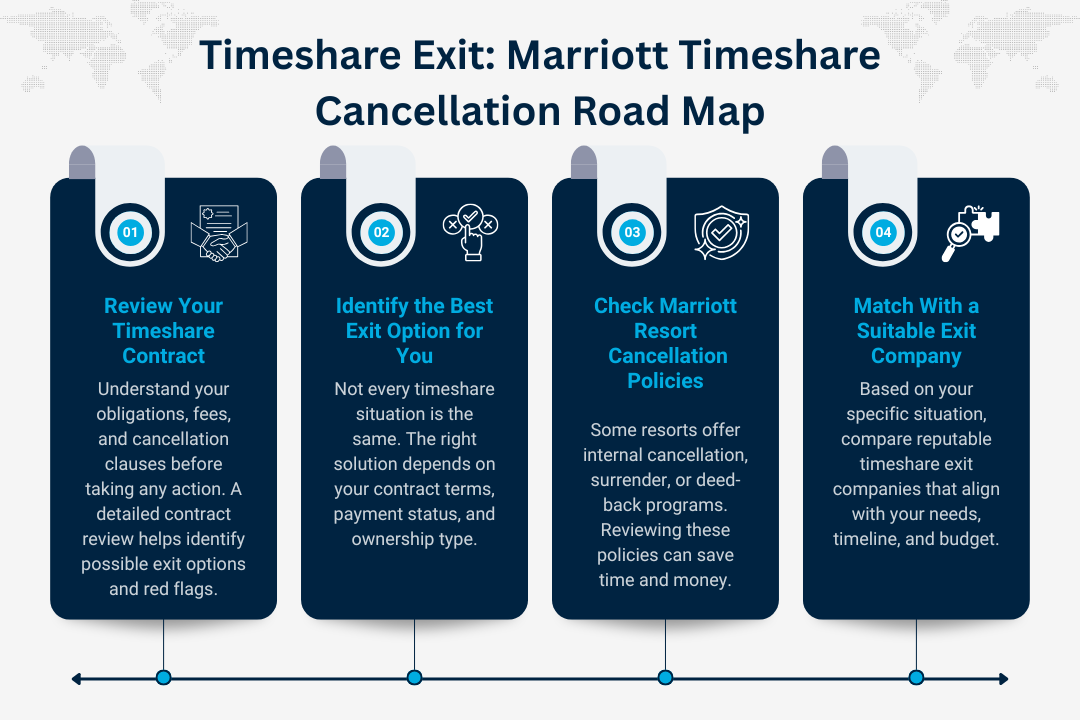
There are a few different ways to get out of a Marriott timeshare, all with their own methods, timing, and cost.
Voluntary Rescission (Cooling-Off Period)
Marriott gives you a get-out, or “cooling-off” right called rescission after purchase. Contract owners can back out of the deal during that window without any penalty.
Length: Usually 5 to 10 days, will vary by the state you purchase it in.
Method: Send written cancellation to Marriott during the rescission period.
Cost: Most commonly there’s no cost, so it’s by far the least expensive way out.
This option is really best for owners who decide right away that the timeshare just isn’t for them. Rescission is only an option within a fairly limited time after purchase, however, so if you’re further along in your ownership of the timeshare, even months or years later, here are some strategies:
Deed-Back or Surrender Programs
Marriott also has a deed-back program that lets owners volunteer to give their timeshare back to the company. This program is especially nice for owners that can no longer deal with the timeshare but do not want to get involved in a resale problem.
You need to contact Marriott Vacation Club, provide proof of ownership, and fill out the paperwork. Marriott assesses eligibility after the request is submitted. Owners should be aware that not all requests are granted, and it takes months to process requests.
Advantages of deed-back programs:
- Cuts out resale market and legal issues.
- Gives a clean, formal method to exit.
Limitations:
- Availability is limited.
- Timeline can be slow.
- Some administrative fees may apply.
Selling a Marriott Timeshare
Another way to leave ownership is selling, but this presents challenges. Owners can sell through:
- Marriott’s official resale programs: Sometimes available but usually restricted.
- Third-party resale firms: Brokers or websites that mediate sales between sellers and buyers.
- Private sales: Advertise directly to potential buyers.
Challenges of selling:
- Timeshares usually depreciate quickly.
- Sales can take months, even years.
- The field suffers from its share of scammers, including third-party brokers who promise that they can make quick sales.
Owners who want to sell right now should always check out the companies and not hand over any upfront fees without doing extensive research.
Renting the Timeshare
Instead of selling right away, some owners on the resale market opt to rent their timeshare weeks. This can help pay the maintenance fees in the interim as you wait for a buyer or offer some financial flexibility.
Pros: Generates temporary income.
Cons: Doesn’t remove long-term obligations. Owners are still liable for their dues and assessments.
Contract Loopholes
Timeshare agreements may include provisions that make them legally cancellable. These may include:
- Misrepresentation during the sales process.
- Failure to explain costs, terms, and limitations.
- Missing signatures or issues with the contract.
Using loopholes often requires a lawyer’s help. A lawyer can review contracts and assist the owners in determining if they have just cause to terminate.
How Long Does It Take to Cancel a Marriott Timeshare Contract?
The process for cancelling a Marriott timeshare varies by method:
- Period of rescission: Instantaneous, usually 5–10 days.
- Deed-back program: Typically 3–6 months to be approved and processed.
- Selling or renting: Can take months or even years, depending on market conditions.
- Legal gray areas or contract disputes: Typically several months, depending on court processes.
Patience is critical. Instant timeshare cancellation is seldom possible after the rescission period has passed. Owners need to plan ahead and persist with their requests.
Expenses of Marriott Timeshare Cancellation
Different cancellation charges may apply depending on the method:
- Rescission: Typically free.
- Deed-back program: Might have nominal administration charges, usually a few hundred dollars.
- Private sale: Broker fees or advertising, typically 10–25% of the sale price.
- Legal assistance: Attorney fees vary widely, from a few hundred to several thousand dollars.
Many owners do not factor these costs into their decision-making, which can make them vulnerable to scams offering quick and inexpensive cancellation. Knowing potential costs early is key.
Avoiding Timeshare Scams
There are many scams targeting timeshare owners. Common red flags include:
- Promises of fast cancellation for a large upfront fee.
- Direct requests for payment before doing anything.
- Businesses that cannot be found online or that have negative reviews.
Tips to avoid scams:
- Do your homework before engaging with any company.
- Never pay large fees upfront.
- Always verify options directly with Marriott.
- Consider consulting a reputable timeshare lawyer.
Being cautious helps owners avoid losing money and falling victim to scams.
How to Write a Marriott Timeshare Cancellation Letter?
For rescission or deed-back requests, the cancellation letter should be formal. Key elements include:
- Owner Information: Name, address, and account number.
- Statement of Intention: Clearly indicate the desire to cancel or terminate the timeshare.
- Cite the law or program: Reference rescission rights or the deed-back program.
- Signature and Date: Ensure the letter is signed and dated.
- Delivery: Send via certified mail or other traceable method.
Sample snippet:
“I wish to cancel the timeshare/interval ownership interest in Marriott Vacation Club Program purchased on 05/10/2018 with a purchase price of $20,017.00 (contract number: XXXXX-XXXXX) within the 5 days as stated in AZ rescission funds. Please acknowledge and cancel my request at once.”
A well-composed letter creates a paper trail and helps the process run smoothly.
About Marriott Vacation Club Resorts
Marriott Vacation Club is the premier timeshare brand of Marriott Vacations Worldwide Corporation (NYSE: VAC), a leading global provider of vacation ownership. The modern, family-friendly resorts are fully equipped with pools, spas, and entertainment options. As enticing as these features are, the obligations of ownership, such as fees or infrequent use, can outweigh the benefits.
Knowing what the resorts offer helps owners determine whether keeping the timeshare is worthwhile or if cancellation is the better option.
Bottom Line!
Cancelling a Marriott timeshare may not be easy, but it is possible with the right strategy. Methods include rescission, deed-back programs, resale, rental, and contract loopholes. Lead times range from days to years, depending on the method, and costs range from nothing to several thousand dollars.
You must be careful and well-informed to avoid scams and further financial ruin. A timeshare exit professional or a lawyer is a great resource to seek guidance and safe passage down the legal in order to get out of ownership. The key to cancelling a Marriott timeshare is knowing your options and making informed decisions.
Ready to leave your timeshare stress behind? Our trusted Timeshare Exit specialists connect you with legitimate companies and legal experts to safely and efficiently exit your Hyatt or any other timeshare. Take control of your vacation ownership today!
FAQs
1. Can new timeshare owners cancel their Marriott purchase?
Indeed, Marriott does have a rescission (or “cooling-off”) period of time in which the new owners may cancel their timeshare agreement after original purchase, usually 5–10 days (in some states this can be longer). During this time, you may cancel in writing without penalty or obligation.
2. What should I do if the rescission period has ended?
Once the rescission window has passed, you have other options to exit your Marriott timeshare:
- Deed-back program
- For sale or for rent
- Legal loopholes
3. How do I protect myself from scams when attempting to get out of my timeshare?
To protect yourself from scams, never pay thousands in upfront fees for “fast cancellations.” Contact Marriott directly or a reputable resale program to confirm all options.